AI Tools for Musicians With Day Jobs (Not Just Full-Timers)
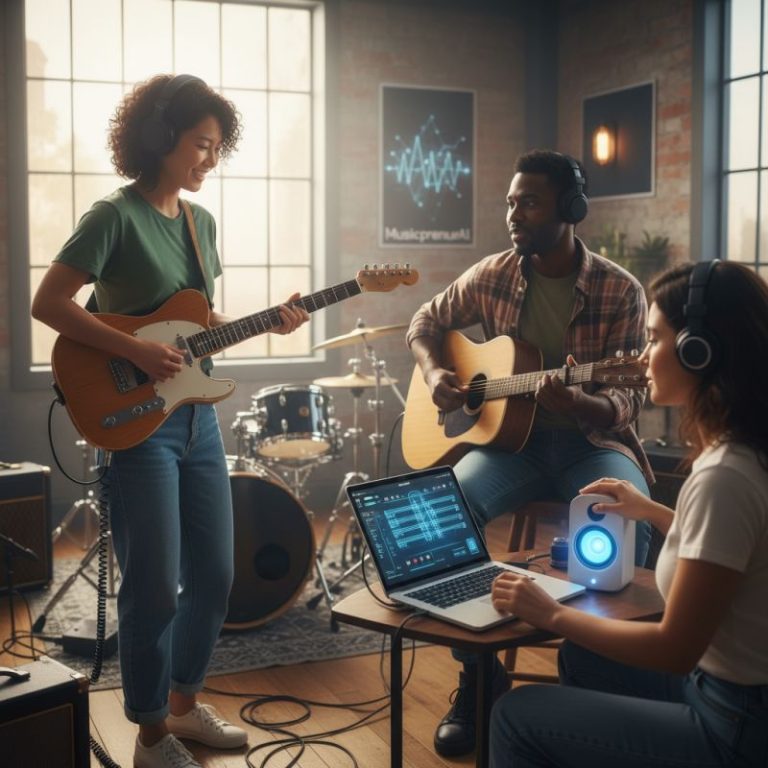
You’re a cover band guitarist who finishes work at five, picks up the kids at six, and squeezes in rehearsal on Thursday nights. Or you’re a singer-songwriter with a full-time teaching gig who writes on weekends and plays open mics when you can. Either way, you’re not making music full-time — and you don’t have a label, a manager, or a PA handling the business side.
That’s where AI tools come in. Not to write your songs. Not to replace your creativity. Just to handle the admin, scheduling, and marketing tasks that eat into the limited music time you’ve actually got.
AI Won’t Write Your Next Song (And That’s Okay)
Let’s get this out of the way first: AI tools aren’t here to replace your creativity. ChatGPT isn’t going to compose a ballad that hits harder than something you’ve lived. RunwayML isn’t going to capture your unique production fingerprint. ElevenLabs isn’t going to nail your vocal character better than your own voice can.
But here’s what they can do — they can handle the stuff that’s eating up your time and stopping you from making music.
Think about your last week. If you’re juggling a day job, family, and weekend gigs, your music time might be eight to ten hours a week. How much of that went to emails? Social media updates? Chasing a venue about a booking? Figuring out which platform to upload your latest track to? That’s where AI becomes useful. That’s where it becomes your bandmate who handles the boring stuff.
The Business Side: Where AI Actually Shines
Whether you’re a solo artist fitting music around a nine-to-five or a cover band trying to coordinate five people with five different schedules, your music business lives in three areas: getting people to hear your music, keeping them engaged once they do, and managing the admin that makes it all possible. AI helps with all three.
Distribution and Platform Strategy
Tools like DistroKid and TuneCore have AI built into their routing systems — they help you decide which platforms are worth your effort based on listener data and growth patterns. Instead of guessing where your cover band’s audience hangs out, you’re responding to what they’re actually doing.
Marketing and Audience Targeting
AI can analyse your streaming data and tell you who’s actually listening. Not guesses. Not demographics. Real behaviour patterns. That means when you’re promoting a new original or announcing your next pub gig, you’re reaching the people who’ve already shown they like what you make — not blasting it to everyone and hoping.
Content Creation at Scale
Here’s one that saves hours every week. ChatGPT can help you draft email newsletters, write social media captions, brainstorm blog post angles, and plan your content calendar. You’re still driving the ideas — AI’s just handling the typing. Need five Instagram posts promoting Saturday’s gig? AI drafts them in the time it’d normally take to write one. You tweak, personalise, and post.
Scheduling and Coordination
For cover bands especially, this is gold. Coordinating rehearsals across five people with day jobs and families is a nightmare. Tools like Calendly and Google Calendar with AI features cut the “Is Thursday good?” email chains down to zero. Everyone sees availability. Everyone books. Done.
The Practical Starting Point
You don’t need to learn a dozen tools. Start with one or two that solve your biggest pain point.
If admin is your bottleneck: ChatGPT or Claude are your friends. Use them for email drafting, planning, content ideas. Ten minutes of AI-assisted writing saves an hour of staring at a blank screen after a long day at work.
If scheduling is the chaos: set up Calendly for your band or teaching schedule. Share a booking link instead of playing email ping-pong.
If you’re drowning in social media: use AI to draft your captions, then spend two minutes personalising them before you hit post. That’s it. You’re not becoming an “AI band”. You’re just getting the admin out of the way so your Wednesday evening is for music, not emails.
The Thing Everyone Misses
Here’s what most AI conversations skip: the ethical bit. Not because it’s boring, but because it’s genuinely important.
AI tools collect data about your listeners. They train on existing music. They’re often built by companies with specific business models. Using them responsibly matters. Check the privacy terms. Think about whether you’re comfortable with how your data’s being used. Consider whether the tool actually serves musicians or just the platform owners.
That’s not scaremongering. That’s just being thoughtful about what tools you invite into your business.
Key Takeaways
- AI can’t replace your creativity — but it can eliminate hours of admin work every week, which matters even more when your music time is limited
- Part-time musicians and cover bands benefit most from AI scheduling and coordination tools
- Use AI for distribution analysis, email drafting, social media planning, and fan management
- Start with one tool that solves your biggest bottleneck, then expand from there
- Check the privacy terms and understand how your data’s being used
What’s Next?
The trick isn’t adopting every new AI tool that launches. It’s finding the one or two that genuinely solve a problem in your workflow — whether you’re a full-time solo artist or a weekend warrior fitting gigs around a day job. Over the next few weeks, we’ll be diving deeper into specific tools for specific problems — admin, scheduling, promotion, and more. If there’s a particular part of your music business that’s got you stuck, let us know. That’s where we’ll focus.